Embracing Teen Failure for Growth
You're in the driver's seat on the way home from your teenager's soccer game. The game didn’t go well — they missed the penalty kick that could've tied the score, and now they're staring out the window, earbuds in, body language broadcasting disappointment. It’s tempting to jump in with words of comfort, to offer reassurances and solutions. But sometimes, the most supportive thing you can do is allow them to sit with their experience of failure.
Letting your teenager fail is one of the hardest parts of parenting. You want to protect them from pain, to shield them from disappointment. Yet, failure is a fundamental part of growth. It’s how they learn resilience, problem-solving, and self-reliance. When you let them face the consequences of their actions, you're giving them the chance to understand their own strengths and limitations.
In moments like these, the key is to shift from a rescuer to a supporter. Start by validating their feelings. You might say, "I can see you're upset about the game. It's tough to miss a shot you really wanted to make." By acknowledging their emotions, you’re not dismissing their experience or jumping in to fix it. Instead, you're creating a space where they feel safe to express themselves.
Once the initial emotional wave passes, encourage reflection. You could ask, "What do you think you might do differently next time?" or "What did you learn from today’s game?" This approach nudges them to consider their role in the situation and think about solutions, fostering a mindset geared towards growth rather than avoidance.
It's also crucial to model failure as a natural part of life. Share your own stories of setbacks and how you navigated them. This not only normalizes failure but also demonstrates resilience and problem-solving in action. You're showing them it’s okay not to be perfect and that growth often comes from our mistakes.
When they do fail, resist the urge to swoop in with immediate solutions. Instead, offer your support by helping them brainstorm their options. Ask them what they think might help or if they want your input. This empowers them to take ownership of their choices and learn from the process.
Finally, remind them that failing at something doesn’t mean they are a failure. Reinforce the idea that effort and perseverance are more valuable than immediate success. Praise their willingness to try and their courage to learn from the experience, rather than focusing solely on the outcome.
This journey isn't easy, but embracing failure is a critical step in building your teenager’s self-esteem and resilience. As they learn to navigate setbacks, they'll develop the confidence to tackle challenges head-on. This approach reflects the insights found in "Your Pressure Isn't Proof," helping teens understand that perfection isn’t the goal; growth is.
The Response Training Series
Short, honest workbooks for teens who can't stand workbooks — a trilogy, one feeling at a time.
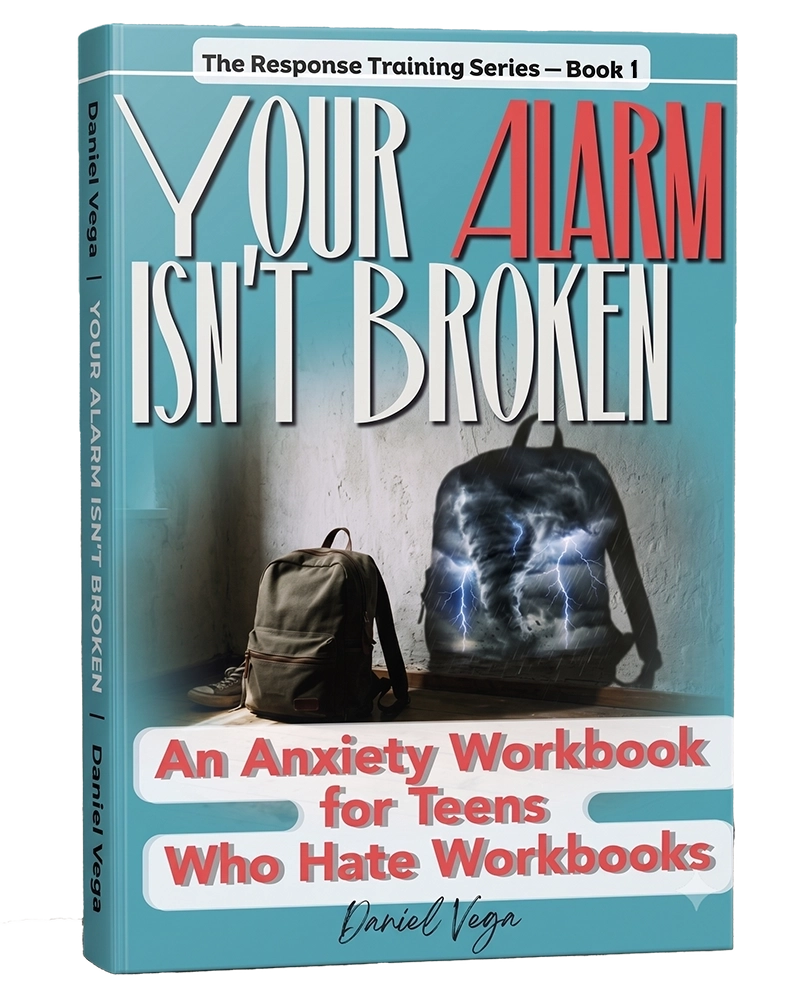 The Response Training Series — Book 1
Your Alarm Isn't Broken
An Anxiety Workbook for Teens Who Hate Workbooks
Buy from $14.99
 The Response Training Series — Book 2
Your Awkward Isn't Showing
A Social Anxiety Workbook for Teens Who Hate Workbooks
Buy from$14.99  The Response Training Series — Book 3
Your Pressure Isn't Proof
A Performance Anxiety Workbook for Teens Who Hate Workbooks
Buy from$14.99 Get the free toolkit
One page, six tools your teen can use the moment anxiety spikes. Sent straight to your inbox.
No spam, ever — just the toolkit and the occasional good word.